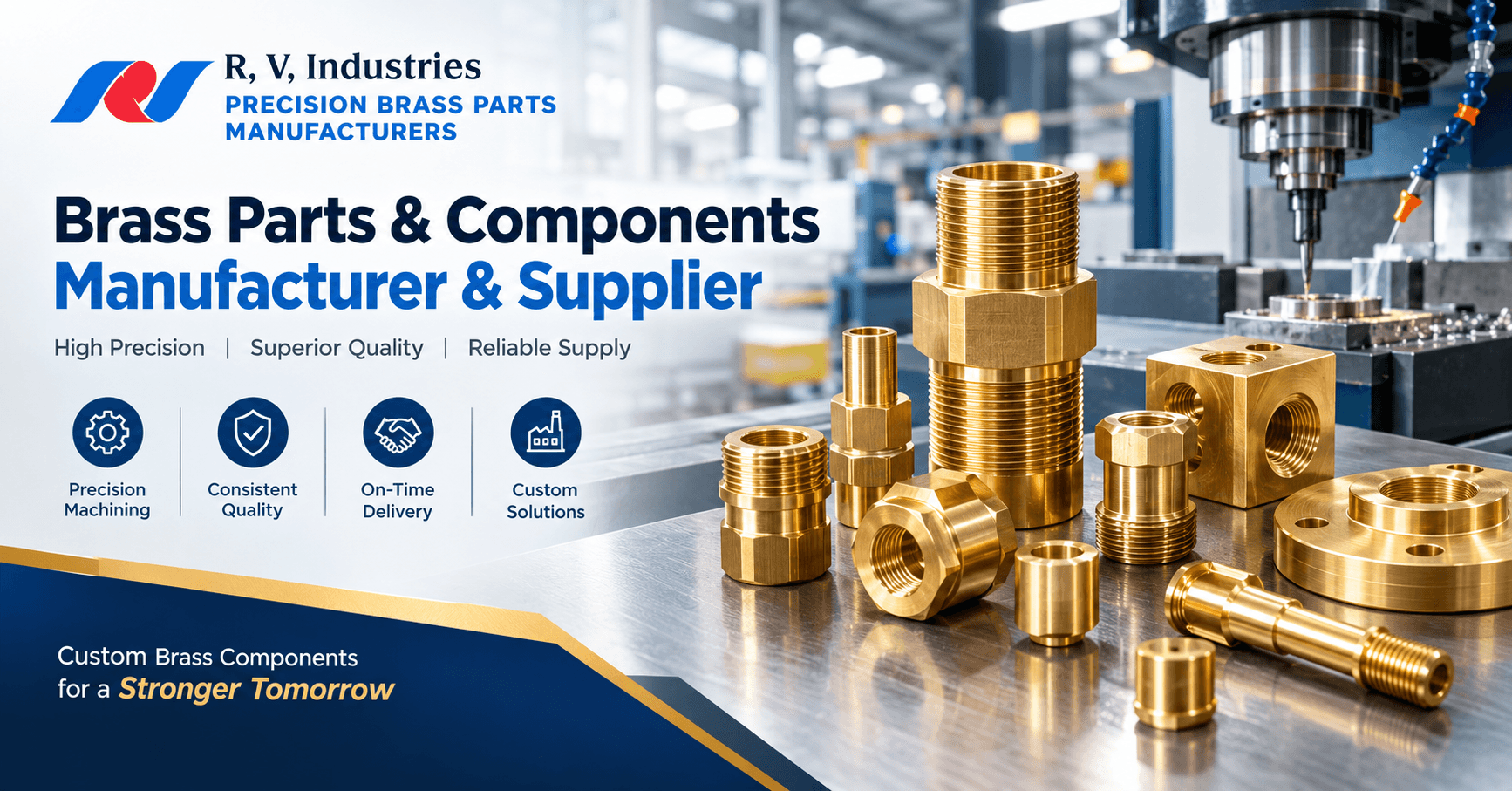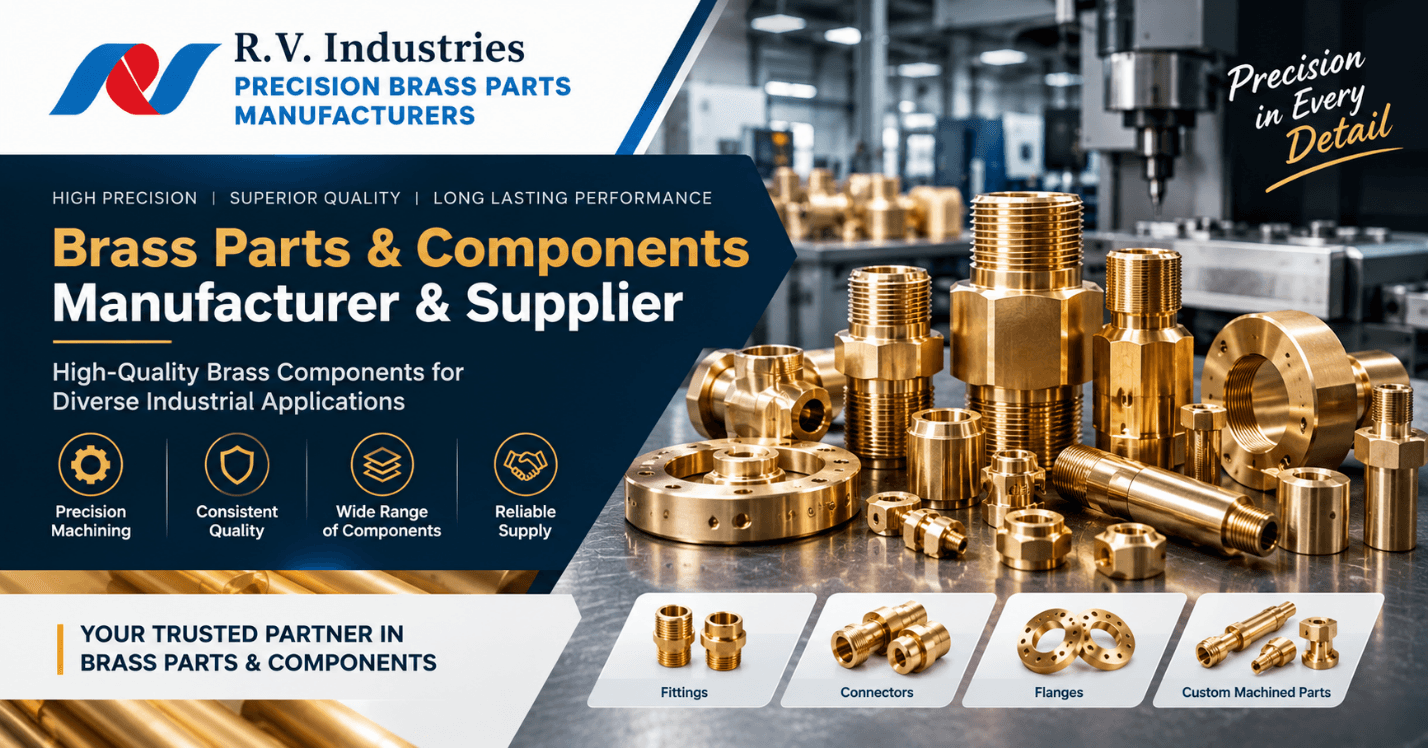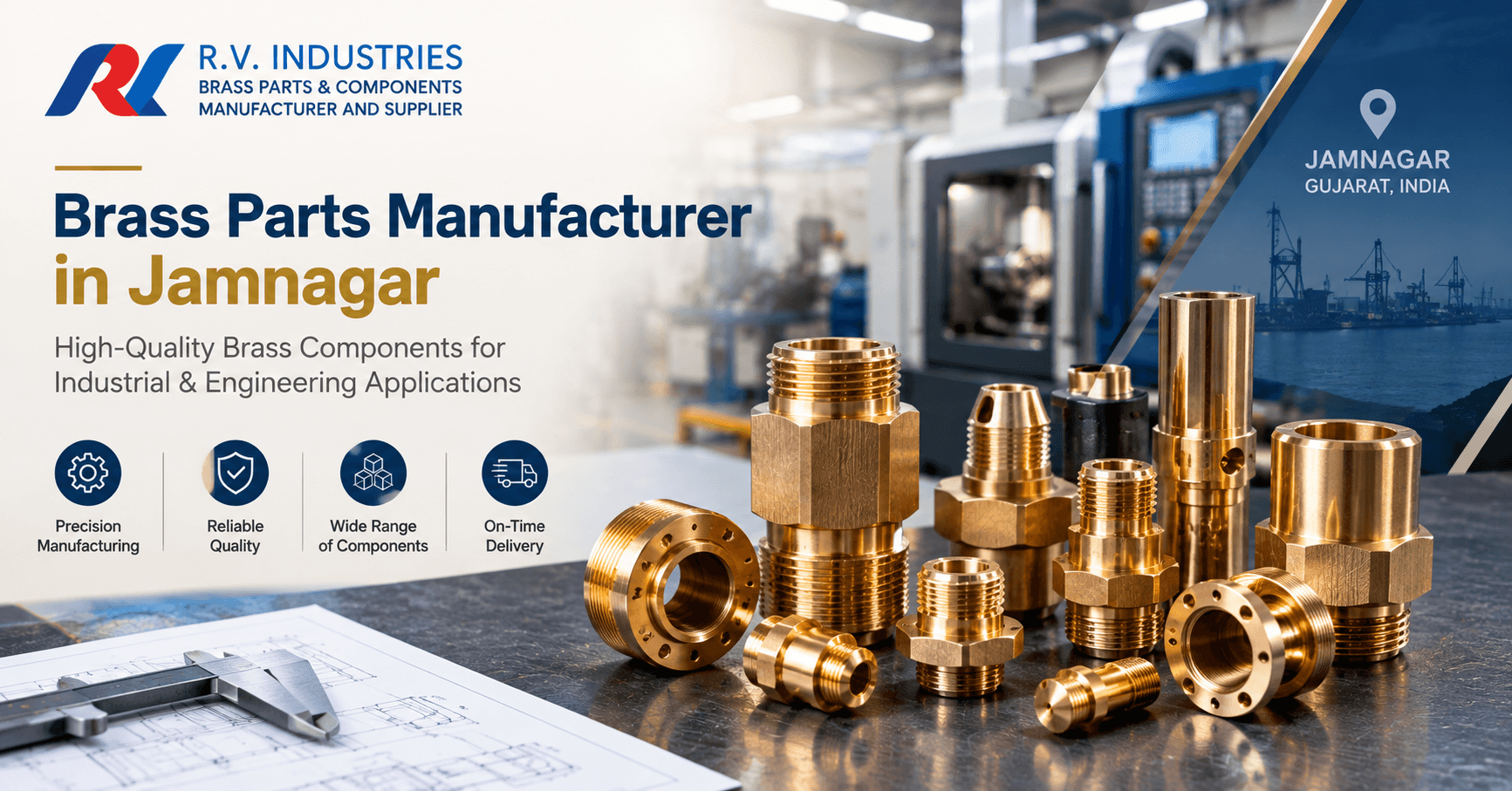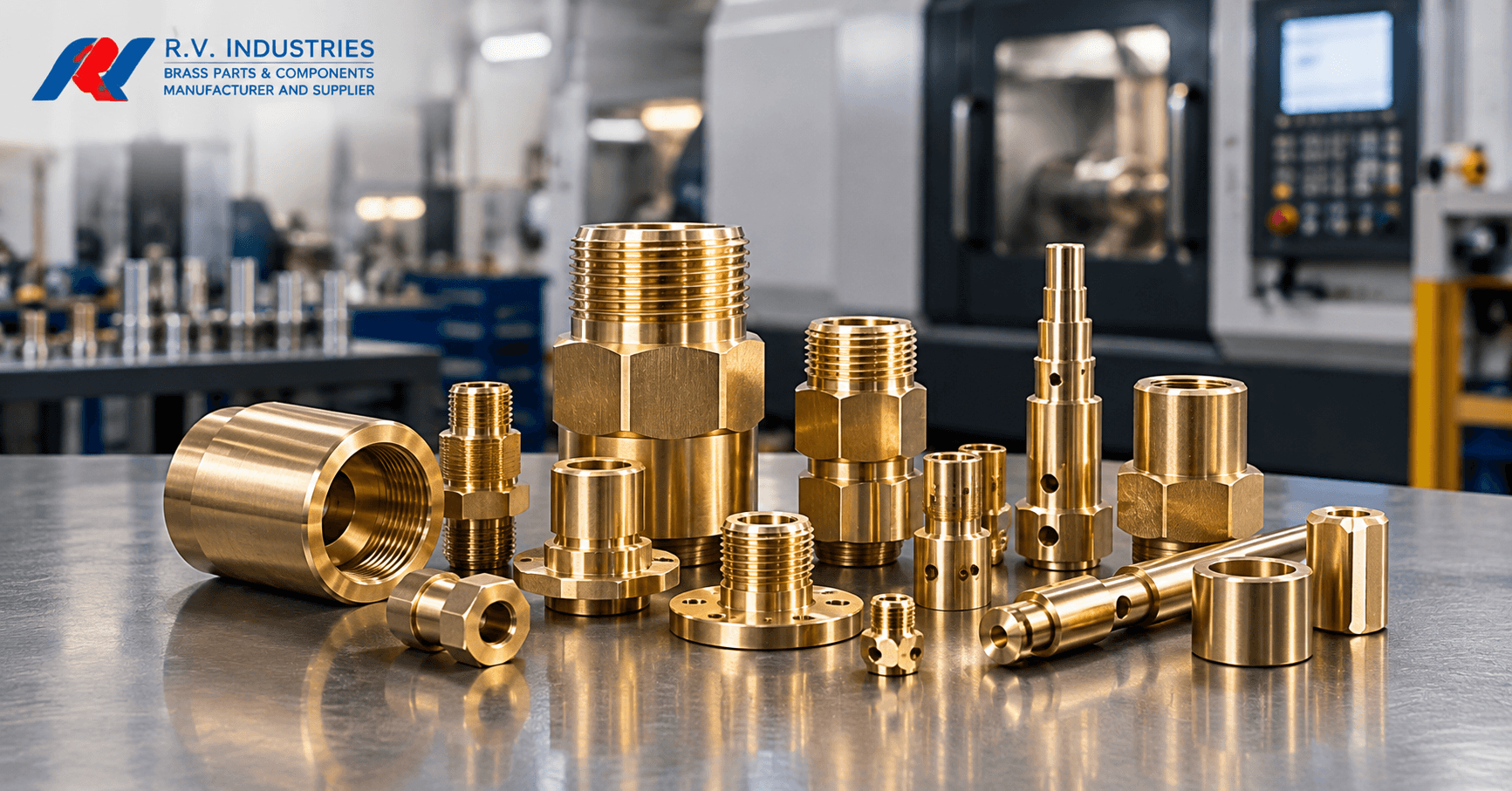
Brass components play an important role in modern manufacturing, engineering, and industrial operations. Known for their versatility, machinability, and corrosion resistance, brass parts are used in applications where reliable performance and consistent manufacturing quality matter. Choosing the right brass components manufacturer can help businesses source suitable parts for their operational requirements while maintaining quality and production efficiency.
For manufacturers, engineering companies, and industrial buyers, selecting a dependable supplier involves more than comparing prices. Buyers must consider material suitability, dimensional accuracy, manufacturing capabilities, quality control, and communication throughout the procurement process.
R.V. Industries is a brass parts manufacturer and supplier in India, offering brass components for industrial and engineering applications. Understanding the factors that influence component quality can help businesses make informed purchasing decisions and establish productive supplier relationships.
What Does a Brass Components Manufacturer Do?
A brass components manufacturer produces parts made from brass for different industrial, engineering, and commercial applications. Brass is an alloy primarily composed of copper and zinc, although its composition can vary depending on the intended application and required properties.
Manufacturers work with customer requirements to produce components that meet the necessary design, dimensional, and functional expectations. Depending on the component and manufacturing process, production may involve machining, forming, cutting, finishing, and inspection.
A professional manufacturer must understand the relationship between material selection, component design, manufacturing processes, and end-use requirements.
Understanding the Importance of Brass Components
Brass is widely used because it offers a combination of properties that can be useful in industrial environments. The suitability of a particular brass grade depends on its composition and the conditions in which the component will operate.
Common advantages of brass include:
- Machinability: Many brass grades are suitable for machining operations that require accurate dimensions and defined shapes.
- Corrosion resistance: Brass can resist corrosion in many environments, although performance depends on the alloy and operating conditions.
- Versatility: Brass can be used to manufacture components for a range of engineering and industrial applications.
- Conductivity: Brass conducts heat and electricity, making it useful in certain applications where these properties are required.
These characteristics make brass an important material choice for businesses seeking components with specific functional and manufacturing requirements.
Industrial Applications of Brass Components
Brass components are used across multiple industries because different brass alloys can support a variety of mechanical and functional needs. The appropriate component depends on the design, operating environment, and performance expectations of the application.
Engineering and Manufacturing
Engineering and manufacturing operations often require components with consistent dimensions and suitable material properties. Brass parts may be used in assemblies, machinery, equipment, and other engineered products.
Manufacturers must understand the intended use of each component to determine suitable material and production requirements.
Electrical and Electronic Applications
Brass is used in selected electrical and electronic applications because of its conductivity and machinability. Depending on the design, brass components may be incorporated into connectors, terminals, and other electrical assemblies.
The material grade and component design should be selected according to the electrical, mechanical, and environmental requirements of the application.
Plumbing and Fluid-Handling Systems
Certain brass components are used in plumbing and fluid-handling equipment because suitable brass alloys can offer useful machinability and corrosion resistance.
However, not every brass alloy is appropriate for every fluid, pressure, or temperature. Buyers should verify that the material and component design meet the applicable requirements before placing an order.
Industrial Equipment and Machinery
Industrial equipment may require specially designed metal components to support assembly, movement, connections, or other mechanical functions. Brass can be suitable for selected parts where its properties align with the application's requirements.
Working with an experienced supplier helps businesses communicate their specifications and identify appropriate manufacturing options.
How to Choose the Right Brass Components Manufacturer
Selecting a reliable manufacturing partner is essential for maintaining consistent procurement and reducing avoidable production issues. Buyers should evaluate suppliers based on their ability to understand requirements, communicate clearly, and deliver components that match the agreed specifications.
1. Evaluate Manufacturing Capabilities
Start by understanding whether the manufacturer can produce the component you need. Consider the design, material, dimensions, tolerances, finishing requirements, and expected order quantity.
Ask potential suppliers to review your drawings or technical specifications before confirming whether they can fulfil the requirement.
A clear discussion at the beginning can help prevent misunderstandings during production.
2. Check Material Suitability
The correct brass alloy depends on the component's intended application. Different alloys can have different mechanical, machining, and corrosion-resistance characteristics.
Before ordering, provide relevant information about the component's operating conditions and functional requirements. The manufacturer and buyer can then clarify the material requirements for the application.
3. Understand Quality Control Procedures
Consistent component quality is important for assembly accuracy, product performance, and manufacturing efficiency.
When evaluating a supplier, ask how components are checked against agreed specifications. Depending on the product, relevant checks may include dimensional measurements, visual inspection, material verification, and finishing checks.
The appropriate inspection process should reflect the component's design and intended use.
4. Consider Communication and Delivery Planning
Clear communication helps businesses manage procurement schedules and coordinate production activities.
Discuss order quantities, production timelines, packaging requirements, inspection expectations, and delivery arrangements before confirming an order. If your business requires repeat orders, clarify how specifications and quality expectations will be maintained across future batches.
5. Compare Overall Value, Not Just Price
The lowest quoted price does not always represent the best purchasing decision. Material suitability, dimensional consistency, manufacturing reliability, and communication can all affect the total cost of sourcing components.
Evaluate quotations against the same technical requirements so that the comparison reflects equivalent products and expectations.
Factors That Influence Brass Component Quality
Component quality depends on several connected factors rather than a single manufacturing step. Understanding these factors helps buyers establish realistic specifications and evaluate supplier performance.
Material Selection and Design
The selected alloy should be suitable for the intended operating environment. Component geometry, wall thickness, threaded features, and other design details may also influence manufacturability and performance.
Providing complete drawings and specifications helps reduce ambiguity during production.
Manufacturing Accuracy
Components used in assemblies may need to meet defined dimensional tolerances. Even small variations can affect fit, alignment, or installation in applications where precision is important.
Buyers should identify critical dimensions and communicate any special inspection requirements before production begins.
Surface Finish and Inspection
Surface finish can influence appearance, assembly, and functional performance, depending on the component's purpose. Inspection requirements should therefore reflect the product's actual use rather than relying on a general quality description.
What Buyers Should Confirm Before Ordering
Before placing an order with a brass components manufacturer, prepare the following information:
- Component drawings, dimensions, and required tolerances.
- Preferred brass grade or relevant material requirements.
- Surface finish and any additional processing requirements.
- Order quantity, delivery expectations, and inspection criteria.
Providing these details helps suppliers assess the requirement more accurately and reduces the risk of specification-related delays.
Why Work with an Indian Brass Components Manufacturer?
Sourcing from an Indian manufacturer can be a practical option for domestic buyers and businesses exploring international supply arrangements. The right supplier depends on the required component, technical capabilities, communication standards, order requirements, and delivery arrangements.
Indian industrial buyers may benefit from working with a supplier that understands their engineering requirements and can coordinate specifications and procurement expectations directly.
International buyers should also evaluate export readiness, documentation requirements, shipping arrangements, and applicable regulations when considering an overseas supplier.
For every buyer, the most important consideration is whether the manufacturer can meet the component's defined requirements consistently and communicate clearly throughout the sourcing process.
R.V. Industries: Brass Parts and Components for Industrial Applications
R.V. Industries is a brass parts manufacturer and supplier in India, offering brass components for industrial and engineering applications.
Businesses looking for a brass components manufacturer should begin by identifying their technical requirements and communicating them clearly to potential suppliers. This includes the intended application, material expectations, component dimensions, quantity, and any finishing or inspection requirements.
R.V. Industries provides a starting point for businesses seeking information about brass parts and components for industrial use.
To learn more about the company and its offerings, visit the R.V. Industries website.
When discussing a component requirement, buyers should share relevant technical details so that the suitability of the requested part can be evaluated against the intended application. Confirming specifications, order quantities, and delivery expectations before production helps establish a clearer procurement process.
Frequently Asked Questions (FAQs)
1. What does a brass components manufacturer produce?
A brass components manufacturer produces parts from brass alloys for industrial, engineering, electrical, plumbing, and other applications. The specific components depend on the manufacturer's capabilities and the customer's design and functional requirements.
2. Why is brass used for industrial components?
Brass offers useful properties, including machinability, corrosion resistance in suitable environments, and electrical and thermal conductivity. Its suitability depends on the alloy composition and the component's operating conditions.
3. How do I choose a reliable brass components manufacturer?
Evaluate the supplier's manufacturing capabilities, material knowledge, quality inspection procedures, communication, and ability to meet your specifications. Compare quotations using the same technical requirements rather than price alone.
4. What information should I provide when requesting a quotation?
Provide component drawings, dimensions, material requirements, tolerances, surface finish expectations, order quantity, and delivery requirements. Include any application-specific or inspection requirements that could affect manufacturing.
5. Does every brass component offer the same corrosion resistance?
No. Corrosion resistance varies according to the brass alloy, environmental conditions, and exposure to particular chemicals or fluids. Select the material based on the component's intended operating environment.
6. Where can I find a brass parts manufacturer and supplier in India?
Businesses can explore manufacturers such as R.V. Industries to learn more about brass components for industrial and engineering applications. Visit the official R.V. Industries website for company information and to discuss your requirements.
Conclusion
Choosing the right brass components manufacturer requires careful consideration of material selection, manufacturing accuracy, quality control, communication, and overall value. By defining technical requirements clearly and evaluating suppliers against consistent criteria, businesses can make more informed sourcing decisions.
Brass components serve a wide range of industrial and engineering applications, but their performance depends on selecting suitable materials and ensuring that the finished parts meet the intended specifications.
R.V. Industries is a brass parts manufacturer and supplier in India serving industrial and engineering applications. Visit R.V. Industries to learn more about its brass components and discuss your business requirements.